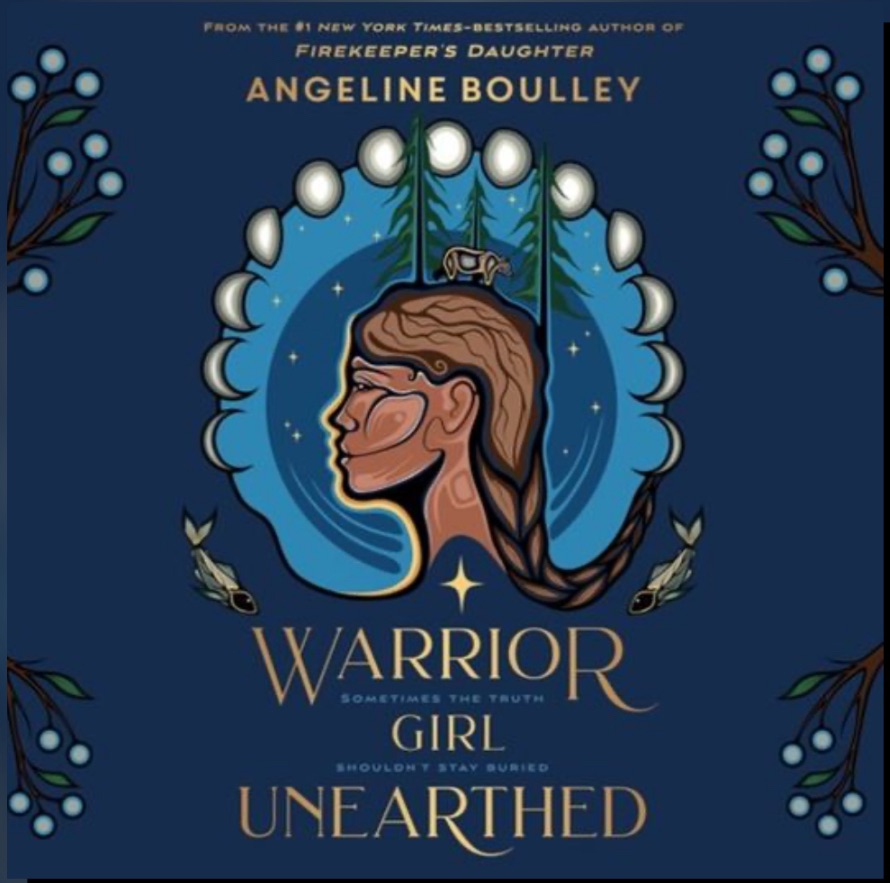
Boulley, A. WARRIOR GIRL UNEARTHED. (2023). Narr by Star LaBlanc, I. MacMillan Audio. ASIN B0B8TK8JMS
Warrior Girl Unearthed is the kind of book that stays with you—not just for its thrilling mystery, but for the way it honors culture, identity, and justice. Though not a direct sequel, it is set in the same world as Firekeeper’s Daughter and told through the fiery voice of Perry Firekeeper-Birch—now sixteen, bold, funny, a little reckless, and entirely unforgettable. As one of Daunis’ younger cousins, Perry picks up the narrative baton and brings us deeper into the life, legacy, and current-day struggles of the Ojibwe people of Sugar Island.
Perry’s personality is magnetic from the start. She’s got a wild streak, constantly comparing herself to her academically gifted twin sister, Pauline, and struggling with feeling “not enough.” She’d honestly rather be left alone to fish than take part in structured activities—but when she crashes her car to avoid hitting a deer, she’s forced to participate in a summer internship program to pay for repairs. That twist of fate is where things really take off. As Perry learns more about her tribe’s efforts to reclaim stolen remains of their ancestors from museums and universities, the story deepens into something more than a teen coming-of-age—it becomes a bold call to action.
Angeline Boulley has an incredible talent for weaving language, history, and lived experience into fast-paced fiction. This book doesn’t teach Ojibwe culture—it lives it. Perry’s voice, with all its sarcasm, heart, and fire, makes the listener feel like they’re walking beside her. Through Boulley’s words and Isabella Star LaBlanc’s narration, the listener is immersed in the richness of Anishinaabe language, traditions, and the modern fight for Indigenous sovereignty. The story never lectures—but it does teach, in the best and most effective way: through personal stakes, emotional connections, and unforgettable characters.
Culturally, Warrior Girl Unearthed is powerful and unflinching. It sheds light on the issue of institutional grave-robbing—where museums and researchers continue to hold onto Indigenous remains and sacred objects—and the obstacles tribes face in trying to reclaim them. Perry’s journey reveals the impact of intergenerational trauma, the resilience of Native youth, and the strength found in honoring one’s ancestors. The characters are nuanced and authentic—neither idealized nor stereotyped. They are funny, angry, brave, flawed, and deeply rooted in their community and culture. Perry doesn’t just fight for justice in the abstract—she’s literally digging it up.
From a justice and equity perspective, this book does everything right. It gives voice to Native issues that are often ignored or misunderstood. It portrays Indigenous teens as fully human: smart, strong, and struggling—just like any teen. But it also shows how systemic injustice continues to impact Native communities today, from the bureaucracy surrounding NAGPRA (Native American Graves Protection and Repatriation Act) to the lack of legal support when sacred items are stolen. Boulley uses the mystery and thriller structure to keep readers engaged, but the cultural education is quietly, powerfully embedded in every chapter.
The audiobook, narrated by Isabella Star LaBlanc, adds a whole new layer of connection. Her voice captures Perry’s attitude, strength, and vulnerability beautifully. The narration is crisp, emotional, and perfectly paced. Listening to the story instead of reading it made it feel even more intimate—like Perry was telling me her story directly. And for students or adults balancing busy schedules, the audio format is a fantastic way to access this rich, important novel.
Classroom or Library Activities:
- Modern Myths Research Project: Have students research a cultural or historical injustice and create a multimedia project inspired by Perry’s journey.
- Justice in the Headlines: Use articles or case studies on repatriation of Native remains to spark student discussion on ethics, ownership, and cultural respect.
- Character Voice Journals: Students write journal entries from the perspective of Perry, Pauline, or another character—exploring how voice reveals identity.
- Ojibwe Language Exploration: Identify and learn Ojibwe words from the book. Discuss how the use of language preserves and honors culture.
- Debate Activity: Organize a respectful class debate around museum ethics and cultural repatriation, using research and evidence from the book and real-world events.
Warrior Girl Unearthed is many things: a mystery, a love letter to culture, a coming-of-age tale, and a rallying cry for justice. It’s a compelling, character-driven story that informs as much as it entertains. For librarians, educators, and readers looking to deepen conversations about Indigenous rights, repatriation, and cultural resilience, this audiobook is a must-have. Perry Firekeeper-Birch may not have asked for this journey—but she takes it with spirit and strength, and brings us along for the ride.
Click here to read my review of Angeline Boulley’s first book Firekeeper’s Daughter.
 Gwinn Reads
Leave a comment