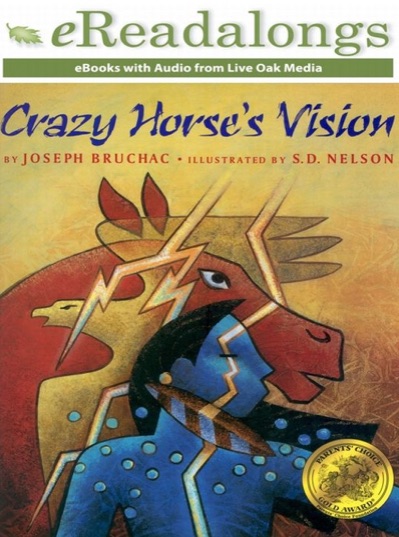
Bruchac, J. CRAZY HORSE’S VISION. (2002/2013). Ill. by Nelson, S.D. Narr. by Bruchac, J., Tree Cody, R., and Zuniga, C. Live Oak Media. ISBN 978-1-4301-1390-4
Crazy Horse’s Vision is a beautifully written and illustrated story that brings to life the early years of one of history’s most well-known Lakota leaders. This version—an e-Readalong—adds another layer of accessibility by highlighting words as they’re spoken, making it a powerful tool for developing readers. The pacing is gentle and steady, allowing struggling readers to follow along without becoming overwhelmed, while still enjoying a meaningful and culturally rich story.
Rather than focusing on the famous battles that come later in Crazy Horse’s life, this book centers on his childhood—before he was known as the great war leader. We meet him as a thoughtful, quiet boy who observes deeply, listens closely, and always shows concern for the well-being of his people. Joseph Bruchac tells the story with care and reverence, presenting Crazy Horse not just as a historical figure, but as a child learning who he is and what it means to lead with purpose. The author’s note at the conclusion of the book gives the reader even more historical context into the life of Crazy Horse.
The cultural representation throughout the book is strong and respectful. S.D. Nelson, who is Lakota, brings incredible depth to the story through his vibrant illustrations. One of my favorite parts of this e-Readalong edition is the note at the end, where Nelson explains the significance of the colors and stylistic choices he used in the artwork. The illustrations are bold and symbolic—drawing on traditional Plains ledger art—but with a modern vibrancy that makes them accessible and engaging for today’s readers. They reflect not only the time period but also the values and traditions of Lakota life, including family bonds, community responsibility, and spiritual guidance.
Bruchac and Nelson do not shy away from depicting historical context, but they do so in an age-appropriate way. Readers see the pressures building on Native people as settlers move westward, and they learn how Crazy Horse begins to understand his own role in resisting that injustice—not through anger, but through quiet strength and vision. The story honors the values of Native leadership: humility, bravery, and care for the collective.
From a justice and equity perspective, Crazy Horse’s Vision is an important corrective to the overly simplified or stereotypical portrayals often found in textbooks. Here, Crazy Horse is not romanticized or villainized—he is humanized. The book allows children to see a Native historical figure in a complex, relatable light, and to understand the deep cultural roots that guided his decisions. The book also avoids harmful tropes by grounding its narrative in the community and worldview of the Lakota people, rather than centering a colonial or outsider gaze.
As an e-Readalong, the format is excellent for building early literacy skills. The narration is clear and expressive, the words are highlighted in sync with the reader’s voice, and the visual pacing is slow enough for children to process both the text and the images. It’s a strong support tool for ESL students, struggling readers, or any child who benefits from multisensory engagement with a book.
Related Books:
- Buffalo Bird Girl by S.D. Nelson
- We Are Water Protectors by Carole Lindstrom
- Fry Bread: A Native American Family Story by Kevin Noble Maillard
- Sharice’s Big Voice by Sharice Davids
- Jingle Dancer by Cynthia Leitich Smith
Classroom or Library Activities:
- Vision Quest Reflection: Ask students to write or draw about a time they had a goal or dream for helping others, connecting to Crazy Horse’s quiet leadership.
- Art Analysis: Let students explore S.D. Nelson’s use of color and symbolism. Have them create their own drawings using symbolic color choices to represent personal qualities.
- Readalong Station: Use the e-Readalong in a listening center. Pair students up so they can help each other follow the highlighted text.
- Historical Timeline Comparison: Create a class timeline that shows key events from Crazy Horse’s life alongside broader events in U.S. history to deepen understanding.
- Cultural Connections: Explore traditional Lakota values like humility, bravery, and responsibility through short research and classroom discussion.
Crazy Horse’s Vision is more than a biography—it’s a story of identity, leadership, and legacy told with grace and authenticity. The e-Readalong version adds an extra level of accessibility, making this important story available to a wider range of learners. For librarians and educators, it’s an invaluable resource for teaching Native history, cultural respect, and literacy—all at once.
 Gwinn Reads
Leave a comment