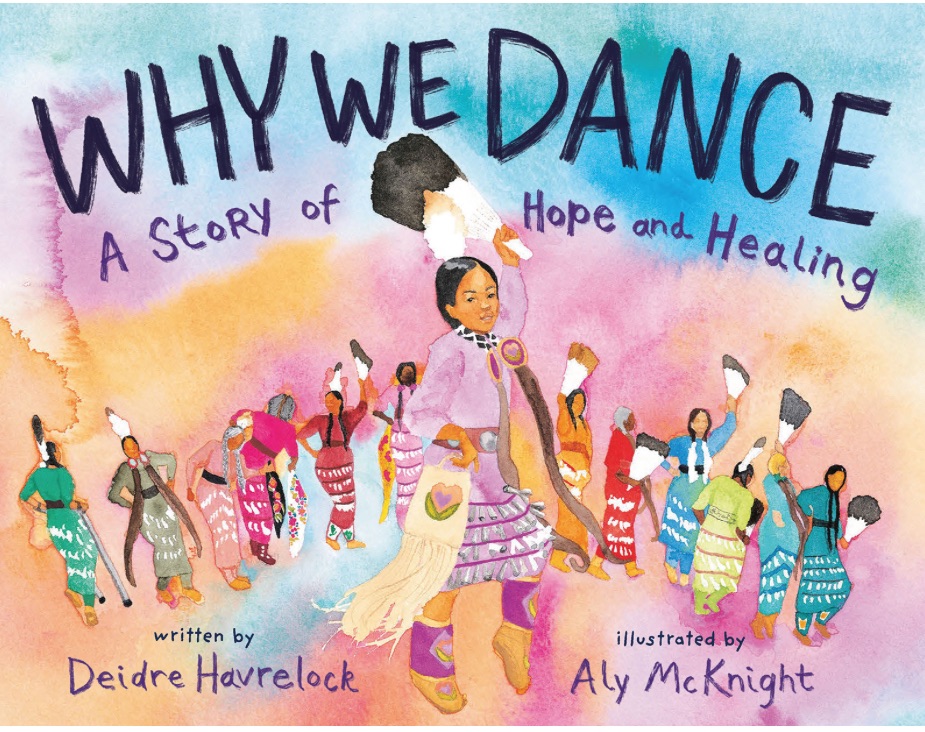
Havrelock, D. WHY WE DANCE. (2024). Ill by McKnight, A. Abrams Books for Young Readers. ISBN 978-1647004002
Why We Dance is a beautifully written and illustrated picture book that celebrates the power of Indigenous tradition, family, and identity through the lens of powwow culture. Told in the voice of a young girl, the story reflects on the many reasons she and her community dance: to honor ancestors, to heal, to celebrate resilience, and to stay connected to their roots. This book isn’t just about movement, it’s about meaning, and it invites readers into a deeper understanding of the traditions and spirit behind powwow dancing.
This story was inspired in part by the healing dances performed by Indigenous women and girls during the COVID-19 pandemic, particularly the Jingle Dance, which has long been associated with healing in Ojibwe culture. Author Deidre Havrelock, of the Saddle Lake Cree Nation, shares in her author’s note how witnessing these dances online moved her to learn more about their meaning. That curiosity and reverence echo throughout the book, resulting in a story that feels both deeply personal and universally resonant.
The book’s narrator, a young girl preparing for a powwow, leads us through her reflections on why dancing matters, not just for herself, but for her family and community. Alongside her are elders, parents, cousins, and other dancers, each connected by rhythm, memory, and love. The story honors intergenerational knowledge and the sacredness of tradition, and does so in a way that’s accessible to young readers while still holding space for cultural depth.
Aly McKnight’s illustrations add another powerful layer to the narrative. Her art is bold and flowing, full of color and movement that mirrors the energy of the powwow circle. Regalia, feathers, braids, and patterns are drawn with care, celebrating the beauty and individuality of each dancer while emphasizing their shared purpose. The visual storytelling reflects the diversity within Indigenous communities and helps bring the text to life for all readers.
Culturally, Why We Dance is grounded in authenticity and respect. It celebrates Indigenous practices not as something of the past but as a vibrant, ongoing way of life. Havrelock’s language is gentle yet strong, full of pride in the endurance of Indigenous identity. There’s no stereotyping here, just a beautiful, affirming representation of community, culture, and spirituality.
In terms of justice and equity, this book makes a quiet but powerful statement. It highlights the resilience of Native traditions in the face of erasure, colonization, and even modern crises like the COVID-19 pandemic. It shows children, particularly Indigenous children, that their stories, families, and celebrations belong on the page and deserve to be honored. And for non-Indigenous readers, it opens a window to deeper understanding, offering insight into why something like a dance can carry the weight of healing, history, and hope.
Related Books:
- Powwow Day by Traci Sorell, illustrated by Madelyn Goodnight
- Jingle Dancer by Cynthia Leitich Smith
- We Are Water Protectors by Carole Lindstrom, illustrated by Michaela Goade
- Fry Bread: A Native American Family Story by Kevin Noble Maillard
- Berry Song by Michaela Goade
Classroom or Library Activities:
- “Why We…” Reflections: Invite students to write or draw about something meaningful they do with family or community and why it matters.
- Music and Movement Response: Play powwow music and let students respond through drawing, dancing, or journaling. Discuss how sound and movement connect to emotion and memory.
- Explore the Jingle Dance: Share background on the Jingle Dress tradition, including how it was used for healing during COVID-19. Watch appropriate videos of performances (with cultural context).
- Author’s Note Discussion: Read and discuss the author’s note at the end to model how inspiration can come from real-world events and personal curiosity.
Why We Dance is more than a story about dancing, it’s a celebration of cultural strength, connection, and healing. It honors the past, reflects the present, and looks to the future, all while inviting young readers to consider their own traditions and reasons to move with purpose. For librarians, teachers, and caregivers, this book is a joyful and meaningful addition to any collection focused on identity, justice, and cultural respect.
 Gwinn Reads
Leave a comment