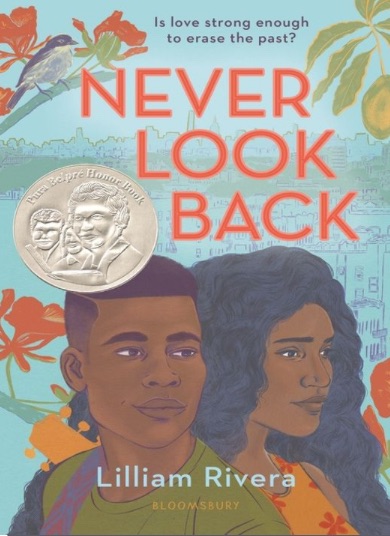
Rivera, L. NEVER LOOK BACK. (2020). Bloomsbury YA. New York. ISBN 978-1-547-60374-9.
Never Look Back is a gritty, contemporary retelling of the Greek myth of Orpheus and Eurydice, reimagined through the vibrant lens of Latinx culture in the Bronx. The story follows Pheus, a Dominican-American teen who’s passionate about music and summer vibes, and Eury, a Puerto Rican girl haunted by the trauma of Hurricane Maria and the supernatural darkness that seems to follow her. Their paths cross in New York City, where love, identity, and healing intertwine with cultural pride and mythic danger. Set in the present day, but rooted deeply in folklore, spirituality, and tradition, the novel explores what happens when past and present, myth and reality, collide.
As someone who genuinely loves mythological retellings, this book really captured my attention. Rivera’s retelling of Orpheus and Eurydice stands out because it doesn’t just change the setting, it transforms the myth entirely by placing it within the lived experiences of Afro-Latinx youth. It immerses readers in Puerto Rican and Dominican culture through its language, descriptions, food, music, and spiritual beliefs. Even though I haven’t personally experienced this culture, the novel offered me a vibrant window into it. The narrative felt authentic and emotionally rich, making the Bronx and the characters within it feel vivid and alive. The lyrical writing style and dual perspectives helped me connect deeply with both protagonists, especially as they navigated grief, love, and personal demons, both literal and figurative.
The novel examines justice and equality through its portrayal of cultural identity, trauma, and resilience. Eury is a complex character who challenges the stigma around mental health, especially in communities of color. What some characters interpret as supernatural elements can also be read as metaphors for anxiety, depression, and PTSD. Rivera doesn’t shy away from these themes, instead giving Eury the space to be messy, afraid, brave, and beautifully human. Pheus, too, is portrayed with emotional depth; he defies macho stereotypes with his vulnerability and kindness. Neither character is reduced to a cultural caricature—they are full of contradictions, strengths, and growth. Their Afro-Latinx heritage isn’t treated as background color, it shapes their identities and their understanding of the world in a meaningful way.
Reading Never Look Back pushes us to reflect on how we support those navigating invisible trauma and how culture, community, and storytelling can become sources of strength. Rivera’s book encourages readers, especially young adults, to see themselves as worthy of love and healing, even when haunted by past experiences. For educators and librarians, this book is an invaluable resource for sparking meaningful conversations about mental health, immigration, generational trauma, and representation in literature. It’s also a beautiful example of how classic stories can be reclaimed to reflect diverse voices and truths.
To continue promoting equity and justice, educators might include Never Look Back in literature units that explore mythology, identity, or social issues. Classroom libraries can be enriched by adding more stories by Afro-Latinx authors and creating space for students to tell their own stories, especially those who don’t always see themselves reflected in traditional curriculum. Discussions about mental health awareness, the immigrant experience, and how culture shapes perspective can grow from this novel’s themes.
Related Books:
- Clap When You Land by Elizabeth Acevedo
- Juliet Takes a Breath by Gabby Rivera
- Shadowshaper by Daniel José Older
- I Am Not Your Perfect Mexican Daughter by Erika L. Sánchez
Classroom or Library Activities:
- Myth Reimagined Project: Invite students to modernize a myth using their own cultural lens or a social issue they care about.
- Soundtrack to a Story: Have students curate a playlist that reflects Eury and Pheus’s emotional journeys.
- Mental Health Conversations: Facilitate a class discussion or journaling activity about mental health awareness in marginalized communities.
- Cultural Exploration Posters: Students can research and present on a cultural tradition or spiritual practice mentioned in the book.
Never Look Back is a lyrical, emotionally resonant novel that redefines what it means to survive, love, and heal. It’s a testament to the power of storytelling, how old myths can be made new again when told through voices that have long been unheard. This book deserves a place on every library shelf and in every classroom where students are encouraged to dream, question, and grow.
 Gwinn Reads
Leave a comment