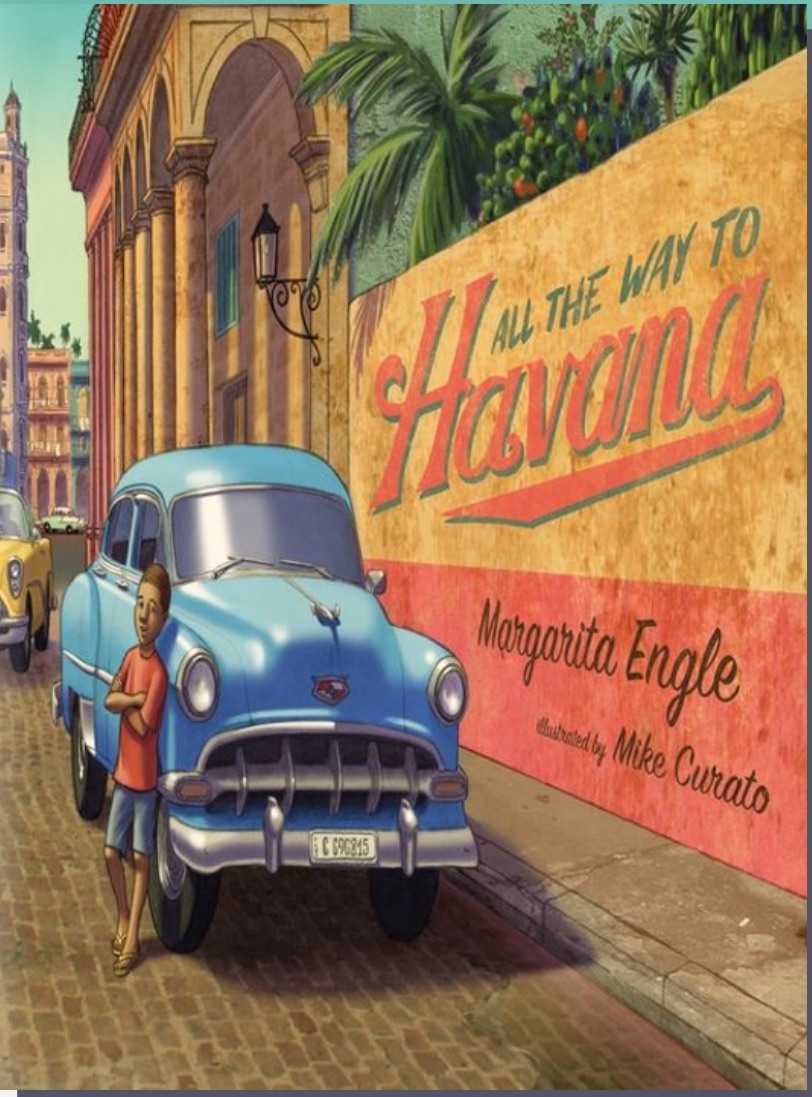
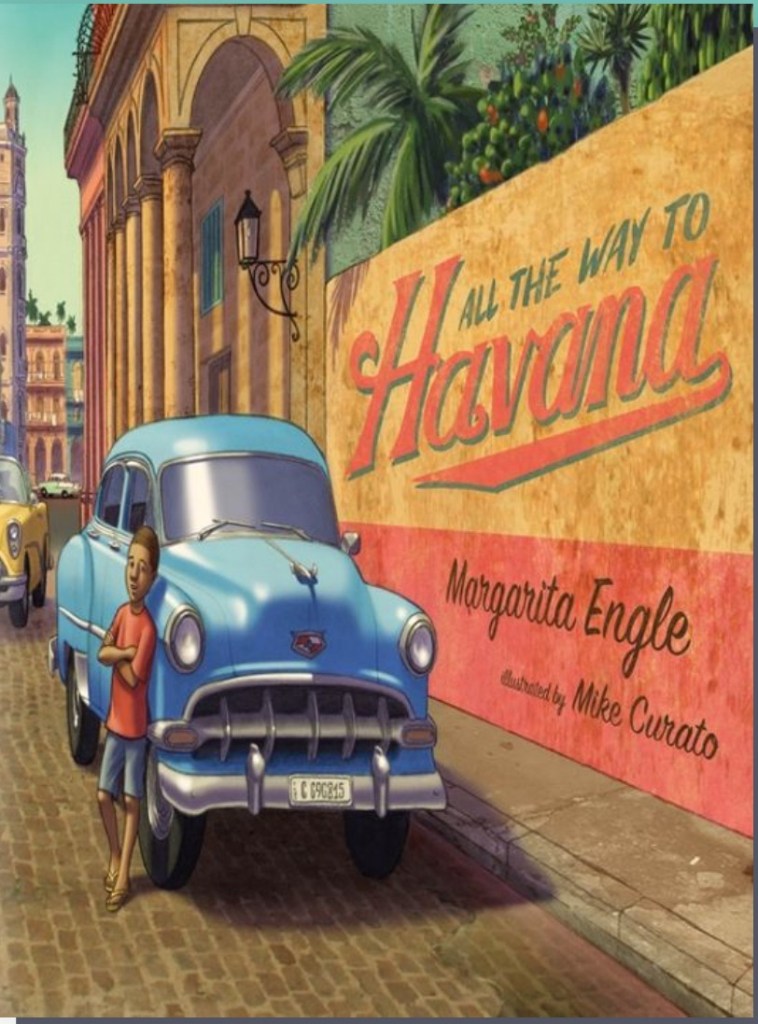
Engle, M. ALL THE WAY TO HAVANA. (2017). Ill. by Curato, M. Henry Holt and Company, NY, NY. ISBN 978-1-250-18456-6
All the Way to Havana is a joyful ride through the heart of Cuba, filled with color, rhythm, and the spirit of ingenuity. Margarita Engle’s lyrical prose, paired with Mike Curato’s beautifully detailed illustrations, brings readers along on a family’s road trip from the countryside to the vibrant streets of Havana. It’s a sensory celebration of Cuban culture—full of music, movement, and life.
One of the first things that struck me about this book was the illustrations. They’re brightly colored, vivid, and full of detail. Curato’s artwork captures the texture of life in Cuba—from weathered buildings to bright laundry lines, vintage cars to wide smiles. There’s a warm realism to each page that invites readers to pause and soak in the world he’s brought to life. The old cars, all older than 1959, are lovingly drawn, showing how Cubans keep them running with creativity and care. It’s not just a background detail—it’s central to the story’s heart and theme of resilience.
The characters are a loving, determined Cuban family on a special day. We follow a young boy and his parents as they prepare for a trip to Havana to celebrate a baby cousin’s birthday. Their car, Cara Cara, isn’t fancy or new—it rattles, wheezes, and chugs—but it’s part of the family’s story. The boy narrates with excitement and pride, reflecting the culture’s value of family, resourcefulness, and joy in small things. The family is portrayed authentically—working together, laughing, and observing the beauty of everyday Cuban life with appreciation.
As they drive, they pass through scenes of Cuban daily life: children playing, a wedding celebration, people working, and music filling the streets. The setting is not just visually rich; it’s grounded in reality and captures the vibrant spirit of Havana. It feels specific, real, and respectful—nothing exaggerated or romanticized, just lived-in and full of pride.
Cultural values are front and center. From the lovingly maintained vintage cars to the sounds of the street, the book embraces Cuban traditions with honesty and admiration. Spanish words are sprinkled naturally throughout the text, giving authenticity to the voice without needing heavy explanation. Engle includes a note at the end that gives context about the state of cars in Cuba, adding educational value for older readers or curious minds. The inclusion of onomatopoeic sounds for things like chickens, chicks, and car noises (“pio pio,” “cluck cluck,” and “pata, pata, pata”) adds a fun and immersive linguistic layer, showing the richness of Cuban sound and language.
The story is written in verse, making it engaging and rhythmic—great for reading aloud. There’s lovely alliteration and playful word sounds that reflect both the joy of the day and the unique voice of the narrator. It’s accessible to younger readers while still layered enough to spark curiosity and discussion.
Connections and Follow-Up Activities
Related books:
- Drum Dream Girl by Margarita Engle
- Islandborn by Junot Díaz, illustrated by Leo Espinosa
- Vamos! Let’s Go to the Market by Raúl the Third
- What Can You Do with a Paleta? by Carmen Tafolla
Classroom or Library Activities:
- Sound Exploration: Have students come up with their own sound words for everyday objects (doors creaking, buses beeping) and use them in short poems or stories.
- Map the Journey: Using a map of Cuba, trace a possible route from the countryside to Havana. Discuss what children might see on their own trips—locally or globally.
- Create Your Own Classic Car: Invite students to design their own colorful vintage car using mixed media, celebrating the resourcefulness shown in the story.
- Bilingual Vocabulary Hunt: Highlight the Spanish words in the book and explore what they mean through picture clues or translation games.
- Family Celebration Writing: Ask students to write about a festive day in their own families. What did they do? Who was there? What made it special?
All the Way to Havana is a beautifully crafted window into Cuban culture that highlights joy, determination, and family pride. It’s a celebration of everyday life told through the eyes of a child—and through the rumble and rattle of an old but beloved car. For educators and librarians, it’s a great choice for teaching about culture, language, resilience, and storytelling. Whether you’re reading it aloud or exploring it in a classroom, this book makes the journey worth every mile
 Gwinn Reads
Leave a comment