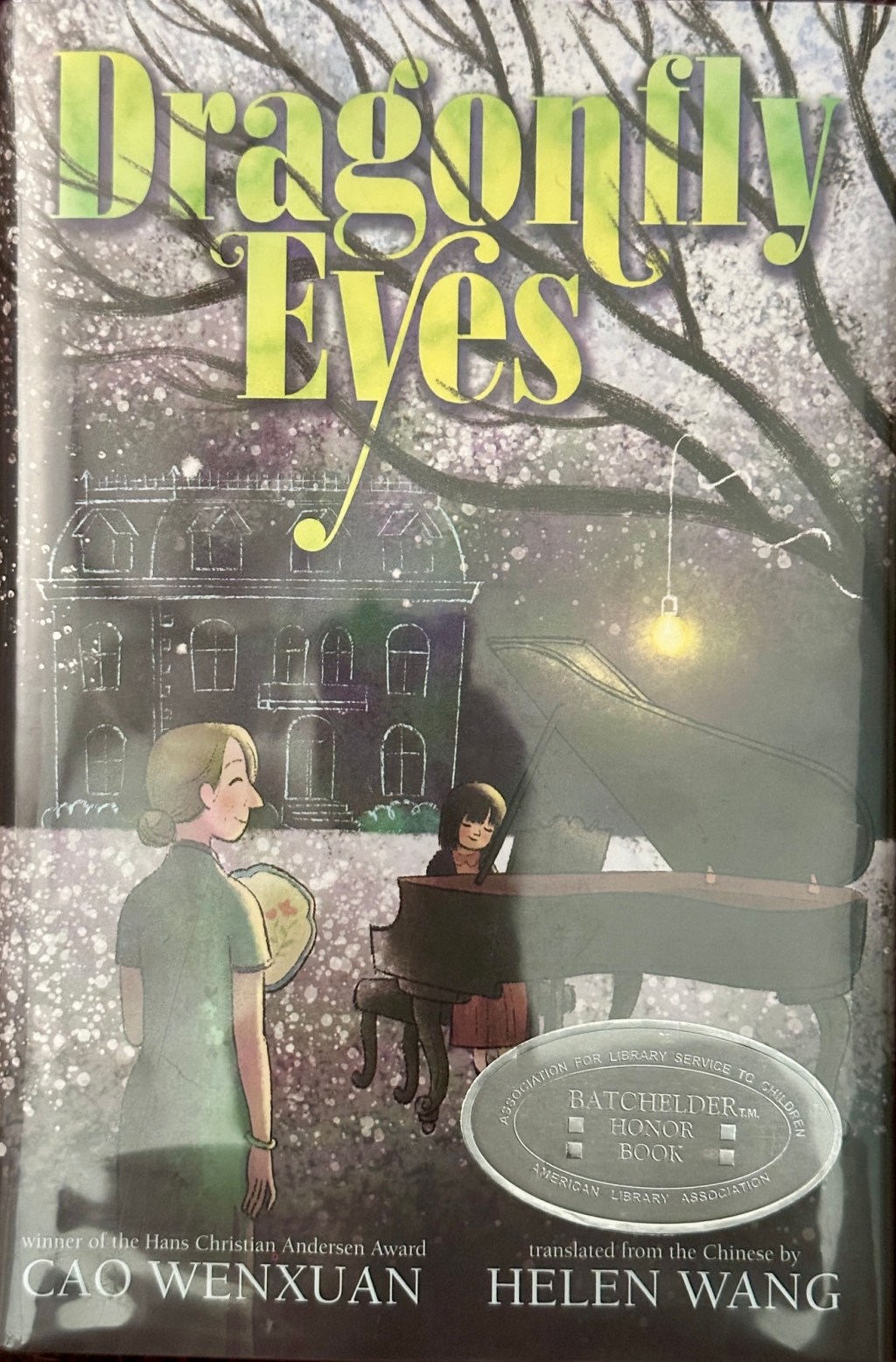
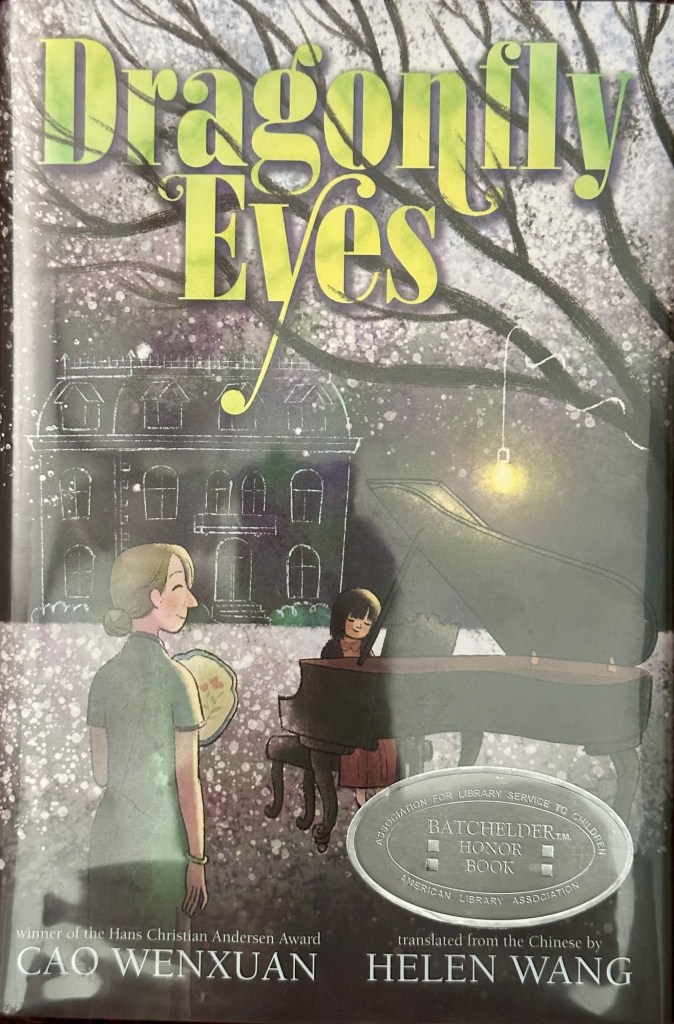
W. Cao. (2021). Dragonfly Eyes. Trans. by H. Wang. Candlewick Press. Somerville, Mass. ISBN 3219080499863
Dragonfly Eyes by Cao Wenxuan is a poignant, beautifully written novel that skillfully blends the personal with the political, offering readers a deeply human perspective on life during a turbulent period in Chinese history. Set in mid-20th century Shanghai, the story follows Ah Mei, a young girl growing up in a bicultural household with her Chinese grandfather and her beloved French-Chinese grandmother, Nainai. Through Ah Mei’s eyes, we experience not only the warmth of family and the small joys of childhood, but also the emotional toll of social unrest, xenophobia, and cultural upheaval during the Cultural Revolution.
Cao presents Chinese culture with depth, honesty, and nuance—from intergenerational family relationships to the powerful influence of traditional values and social expectations. Readers learn about everyday life, political campaigns, and the ways in which conformity and dissent impacted individuals and families. These insights are both culturally specific and universally resonant, particularly in today’s world, where issues of identity, nationalism, and social division are still very much alive. The book offers an accessible way for young readers to explore how cultural and political pressures shape lives—not only in the past, but in our current global climate.
Ah Mei is a quietly powerful protagonist, whose loyalty, empathy, and sense of justice make her incredibly relatable for middle grade and early high school readers. Her experiences—of belonging and not belonging, of witnessing injustice, and of navigating grief and love—mirror those of many young people today, whether they are negotiating identity in multicultural households or confronting unfairness in their own communities.
The English translation by Helen Wang is smooth, lyrical, and faithful to the emotional cadence of the original Chinese. The language flows naturally, retaining the poetic tone of the original while making the story accessible to a wide readership. Readers unfamiliar with Chinese history or culture will not feel lost, as the storytelling is rich in context and emotion.
Dragonfly Eyes lends itself well to classroom discussions and interdisciplinary teaching. In a social studies or history class, it can support lessons on modern Chinese history, the Cultural Revolution, and the long-term effects of political ideologies on personal freedoms. In literature classes, it invites exploration of narrative voice, symbolism (especially the significance of the dragonfly motif), and cross-cultural identity. Teachers might also pair this novel with current news articles about nationalism, immigration, or cultural identity for thoughtful discussion and comparative analysis.
This is a timely, tender, and thought-provoking novel that connects the past with the present, encouraging empathy, critical thinking, and cross-cultural understanding. Dragonfly Eyes is highly recommended for classroom libraries, literature circles, and students ready to explore how personal stories reflect and resist the forces of history.
 Gwinn Reads
Leave a comment