(As Haygood Elementary is a brand new elementary school opening this fall, I have chosen to do LCISD as a whole.)
As educators in Lamar Consolidated ISD (LCISD), we are part of a district that is actively working to integrate technology in ways that support student learning, engagement, and equitable access. This environmental scan provides an overview of how technology is currently being used across our schools and highlights important considerations for teaching and learning in our community.
Understanding Our Community Context
LCISD serves a wide range of communities, from suburban neighborhoods to rural farming and ranching areas. Many families work in education, healthcare, service industries, construction, agriculture, and small business. This socioeconomic diversity means that technology access is not one-size-fits-all—something the district takes seriously when planning digital learning initiatives.
Our region is typically hot and humid, with weather that can impact power, internet stability, and attendance—making remote learning options and technology-based engagement even more valuable.
Most students attend their zoned campuses, though the district offers specialized programs and schools of choice. These variations in school models highlight the need for flexible, adaptable instructional strategies—including the use of digital tools.
Access to Broadband and Device
LCISD has taken important steps to increase home internet access for students:
- District-owned devices are provided to students for both on-campus (classroom sets) and off-campus (by request) learning.
- All devices are filtered through district internet security systems, ensuring safe browsing aligned with the Acceptable Use Policy (AUP).
- The district supports families by sharing low-cost or free broadband options and, in the past, helped make XFINITY WiFi hotspots available community-wide.
However, some students still rely on personal phones to complete assignments due to device or internet limitations. Recognizing these challenges, many educators incorporate offline options or mobile-friendly tools to support equitable access.
The Bring Your Own Device (BYOD) policy allows students to supplement district devices with their own, increasing flexibility in the classroom while reinforcing the importance of responsible use outlined in the AUP.
Instructional Technology Use
Technology in LCISD classrooms is more than a resource—it’s a strategy for engagement. Teachers are encouraged to integrate vetted digital tools that support critical thinking, collaboration, and creativity. The Innovative Learning Teamprovides ongoing support to help educators align technology with effective pedagogy.
LCISD embraces both asynchronous (self-paced) and synchronous (real-time) digital learning models, which are especially useful during virtual instruction, flipped classrooms, or project-based learning environments.
Examples of district-supported technology use include:
- Interactive learning platforms
- Virtual labs and simulations
- Collaboration tools for group projects
- Learning management systems for blended or flipped instruction
Professional Development and Support
Teacher growth is a district priority. LCISD offers structured professional development that is:
- Evidence-based and aligned with instructional goals
- Job-embedded, including coaching and modeling
- Data-driven, with opportunities tracked through the Kickup platform
- Flexible, including access to the TEA Learn portal from the Texas Education Agency
This support ensures that both teachers and school librarians can build confidence and skill in using technology to drive instruction, differentiate learning, and meet the needs of all students.
Communication and Digital Citizenship
The district maintains a strong focus on digital citizenship. Resources for students, families, and staff include:
- A clearly defined Acceptable Use Policy
- Online safety guidelines and expectations
- Curriculum resources that integrate digital responsibility and ethics
These resources are communicated through the district website and campus technology liaisons. Promoting responsible digital behavior is a shared responsibility among educators, staff, and families.
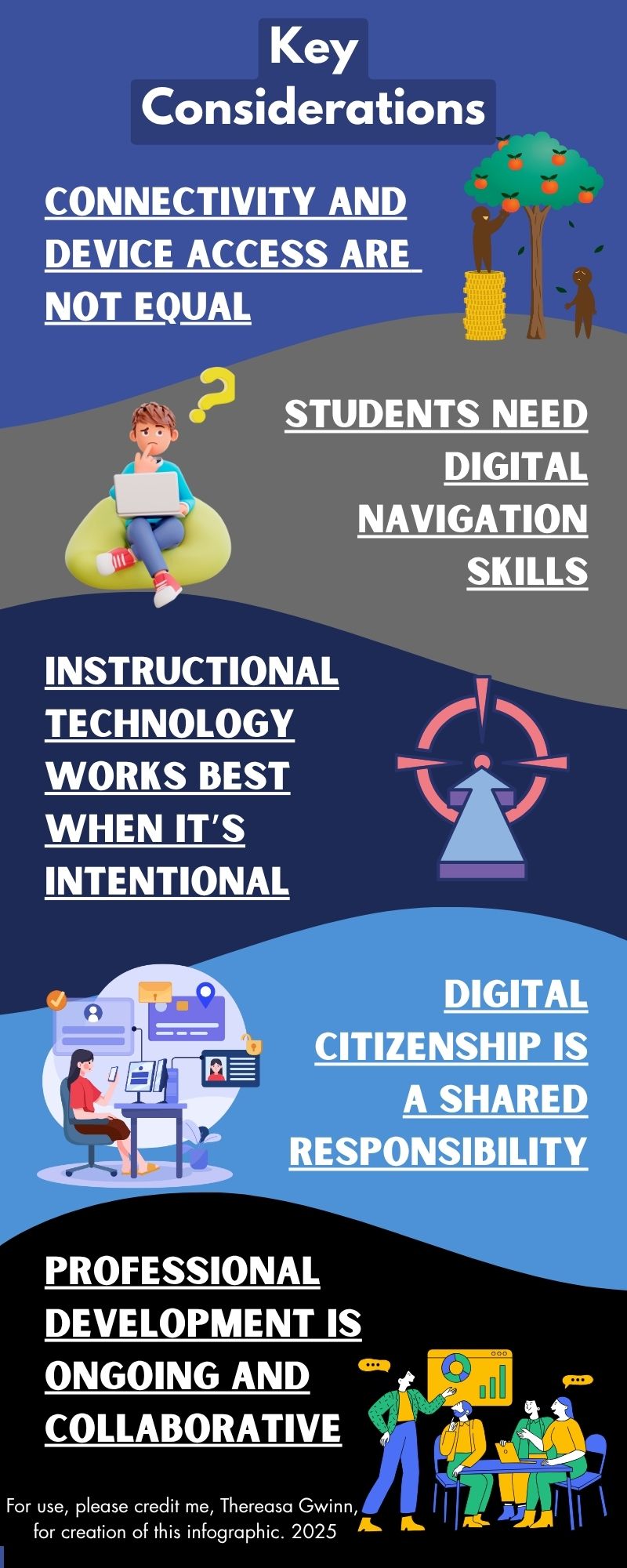
Key Considerations for Educators
As we continue to embed technology into instruction, it’s important to recognize the diverse needs of our students and leverage the strengths of our school community—including our school librarians. Below are some key takeaways to keep in mind:
Final Thoughts: A Partnership Between Teachers and Librarians
Technology is no longer a supplemental part of education—it is central to how we connect, instruct, assess, and empower our students. But technology alone doesn’t create meaningful learning. It’s the collaboration between educators that makes the difference.
Librarians and teachers are natural partners in building these connections, forming a dynamic alliance that enhances the educational experience for students. Librarians are uniquely positioned to support a variety of initiatives:
1. Digital research projects across content areas, including various disciplines such as history, science, literature, and social studies, not only facilitate a deeper understanding of subject matter but also promote critical thinking and collaboration among learners. By integrating research skills into the curriculum, they empower students to become more adept at navigating complex information landscapes.
2. Technology training and troubleshooting for students and staff ensures that everyone feels confident in using digital tools effectively. Literacy and digital citizenship instruction are essential components of modern education, helping students to not only consume content responsibly but also to create and share knowledge thoughtfully.
3. Providing access to resources, both physical and digital, enriches instruction; students gain valuable opportunities to engage with a diverse array of materials that broaden their perspectives and deepen their learning experiences, thereby fostering a culture of inquiry and continuous growth within the educational community.
Teachers and librarians can collaborate to enhance information literacy and content knowledge through cross-curricular projects, develop tech-integrated station rotations and blended learning lessons, create shared academic support spaces like libraries, and assist students with limited home access to devices or broadband.
In a district as diverse and expansive as LCISD, our greatest strength is our ability to work together toward shared goals. When we leverage the combined expertise of classroom teachers, librarians, and instructional leaders, we ensure that all students—not just some—are equipped to succeed in a digital world.
Let’s continue to build a culture where technology enhances learning, and where our shared commitment to student success is reflected in every click, connection, and collaboration.
Resources:
Lamar Consolidated ISD. (2025). Lamar Consolidated ISD – About. https://www.lcisd.org/about/2020-21-return-to-school/virtual-instruction#:~:text=Lamar%20CISD%20will%20structure%20our,additional%20assistance%2C%20tutoring%2C%20etc.
Lamar Consolidated ISD. (2025). Lamar Consolidated ISD – Acceptable Use Policy. https://www.lcisd.org/89031_3
Lamar Consolidated ISD. (2025). Lamar Consolidated ISD – Child Nutrition Home. https://www.lcisd.org/menus
Lamar Consolidated ISD. (2025). Lamar Consolidated ISD – Digital Citizenship. https://www.lcisd.org/89877_3#:~:text=Digital%20Citizenship%20skills.-,Overview,share%20or%20forward%20unverified%20information.
Lamar Consolidated ISD. (2025). Lamar Consolidated ISD – Innovative Learning. https://www.lcisd.org/73560_3#:~:text=Lamar%20Consolidated%20ISD%20is%20committed,or%20post%20in%20your%20classrooms.
Lamar Consolidated ISD. (2025). Lamar Consolidated ISD – Professional Learning. https://www.lcisd.org/88883_3#:~:text=Professional%20Learning%20Expectations,Continuously%20evaluated%20for%20effectiveness
Lamar Consolidated ISD – Professional Learning – Online Opportunities. (2025). https://www.lcisd.org/89006_3#:~:text=Special%20Sites-,Professional%20Learning%20%2D%20Online%20Opportunities,to%20APPROVED%20in%20the%20system.
Randle, T. (2018, February 6). TEA Standard Application System/2018-2019 Technology Lending. Texas Education Agency. https://teadev.tea.texas.gov/sites/default/files/151%20Lamar%20CISD.pdf
 Gwinn Reads
Leave a comment